
The typical reduction of appetite/interest in food compared to infancy is often of concern to parents, but this reduction in growth velocity is normal for toddlers (Brown, 2011). Overestimated portion sizes often give parents the mistaken impression that their children are picky eaters. This can be further exacerbated by the natural tendency of toddlers to ritualize daily activities in order to deal with environmental changes that they become aware of and often fear during early childhood (Brown, 2011). In addition to the comfort of familiar foods, strong food preferences and vehement dislike of new foods are also a developmentally appropriate manner for young children to express their newly discovered will and independence (Brown, 2011).
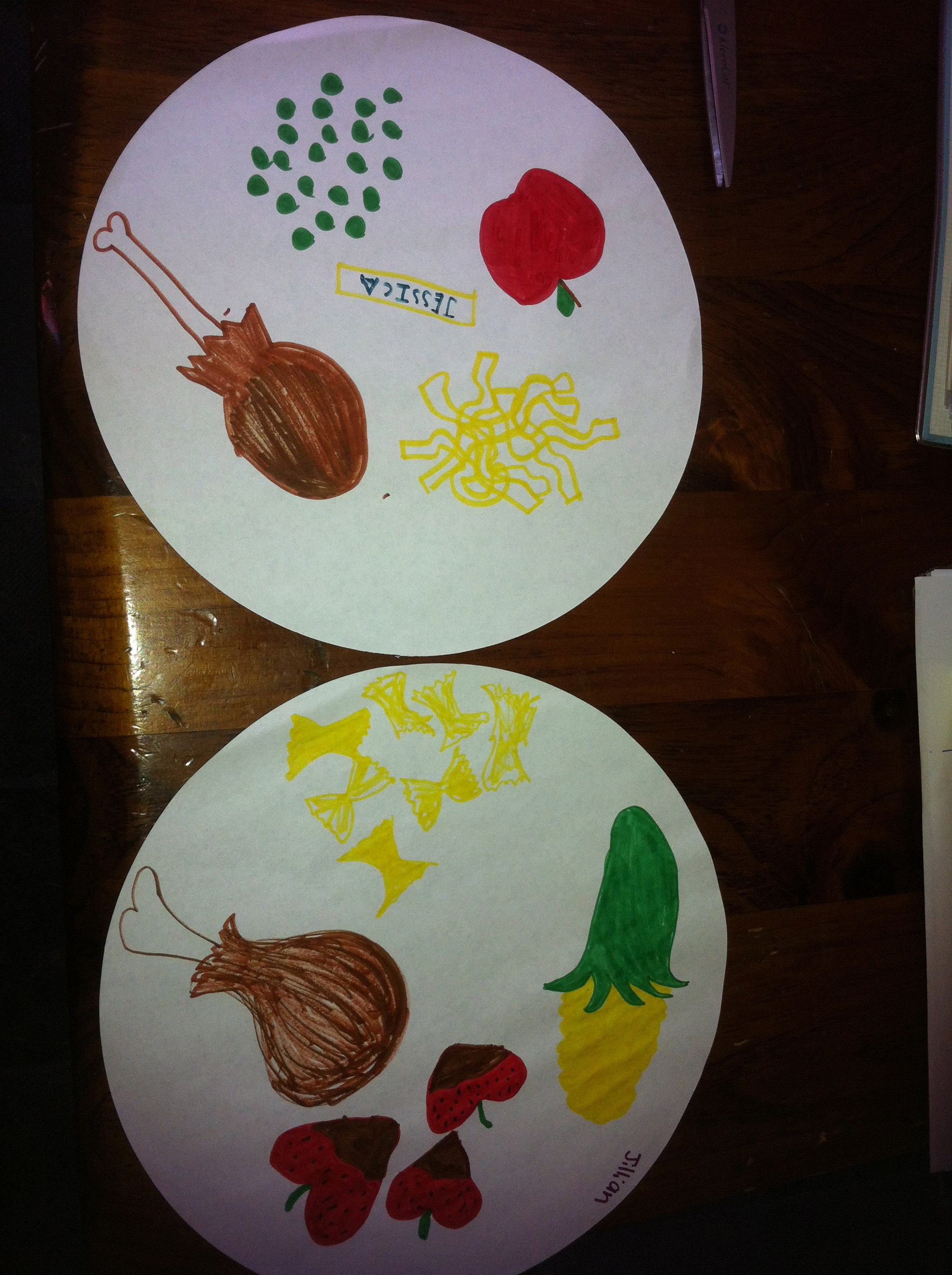
As part of a Nutrition Translation family workshop, young participants designed plates in order to remind themselves about portion sizes and food groups.
In order to promote a healthy relationship with food, parents should avoid fighting with young children about food and should not force them to eat a certain amount or stay at the table (Brown, 2011). Instead, young children should be encouraged to take an interest in different foods by participating appropriately in food preparation (United States Department of Agriculture, 2011) and should be allowed to stop eating when they feel full. Portion sizes should be small, so it is often necessary for a young child’s meals to be supplemented with snacks at other times of the day. However, if these snacks are fat and sugar laden or consist of a sugar beverage like fruit juice, it will often ruin the child’s appetite for more nutrient dense foods (Brown, 2011).
Young children are developmentally inclined to imitate others. Thus, children learn eating habits by watching parents, siblings, and caregivers (Brown, 2011). Fisher, Mitchell, Smiciklas-Wright & Birch (2002), specifically demonstrated that five year old girls’ fruit and vegetable intake was related to parents’ fruit and vegetable intake. It is also important to note that several studies have demonstrated that young girls’ beliefs about food, diet, and self-image are strongly influenced by their parents’ attitudes towards their eating behaviors as well as their mothers’ own eating and dieting behaviors (Fisher & Birch, 2000; Abromovitz & Birch, 2000). As they grow older, children are influenced by the media and advertising as well (American Academy of Pediatrics, 2011).
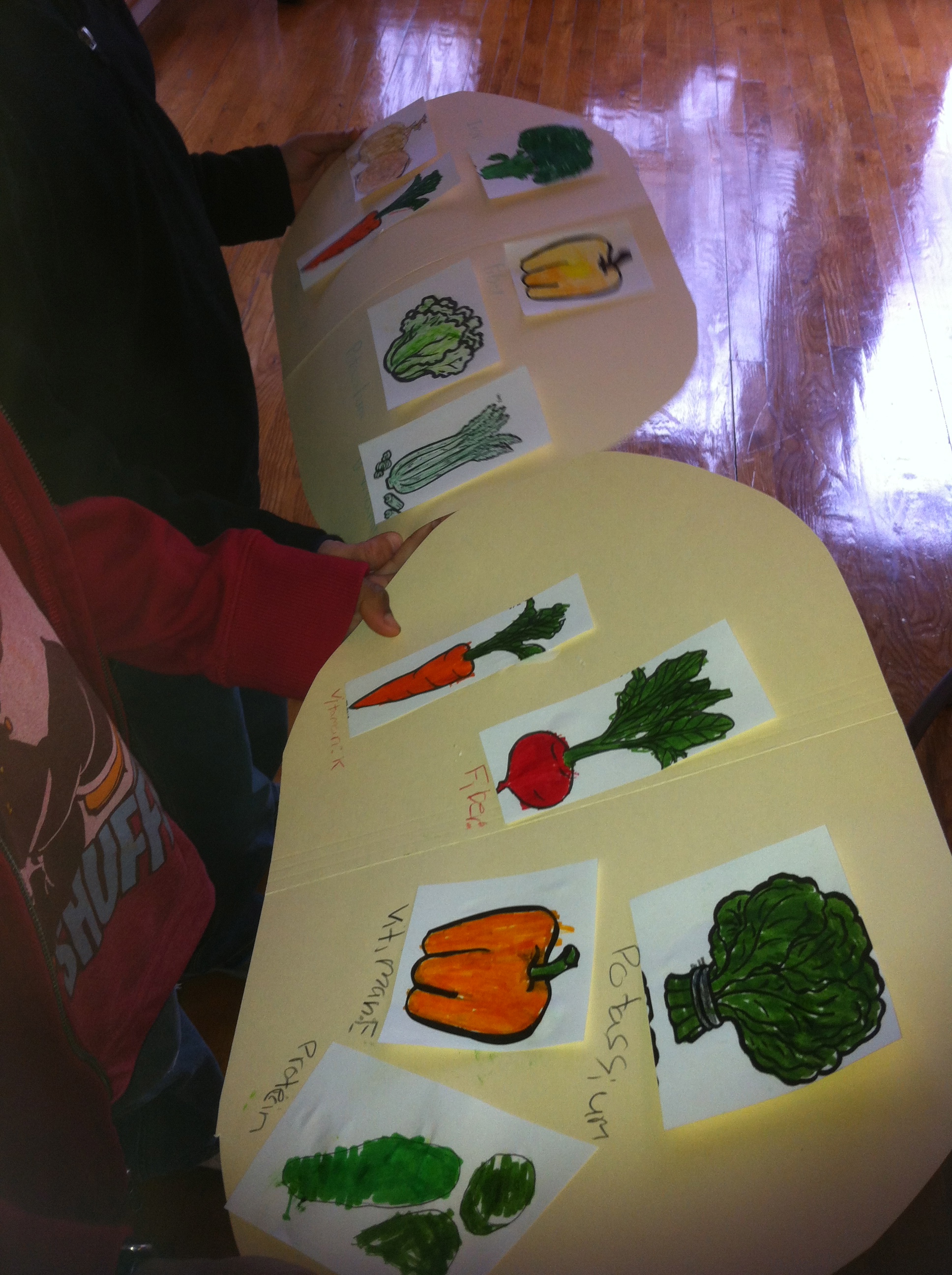
Young participants at a recent Nutrition Translation workshop design their own salads
Because overweight and obesity are so difficult to treat and lead to so many health complications and increased mortality, it is preferable to prevent its onset by developing positive eating habits and a positive relationship with food from an early age.
 nutritiontranslation